Somewhere between a messy inbox, a shared Google Sheet no one trusts anymore, and a Friday afternoon call that should’ve been an email, someone usually says it out loud:
“We need a portal.”
Not a website.
Not a dashboard mockup.
A proper system.
And they’re right.
B2B portals have slipped into that category of infrastructure you don’t notice until it breaks. When they’re solid, work flows. Quietly. When they’re not, everything drags. Decisions stall. Data gets questioned. People invent workarounds that become permanent.
It’s not glamorous software. It’s essential software.
And in 2026, building a B2B portal the right way has very little to do with aesthetics and everything to do with whether your business can move without tripping over itself.
This piece breaks down what B2B portal development actually looks like in practice, why so many portals fall apart after launch, and how teams build platforms that still make sense five years later, not just on demo day.
First, What a B2B portal? Really Is (And What It Isn’t)
A B2B portal is not “a login area.”
That’s the shallow definition.
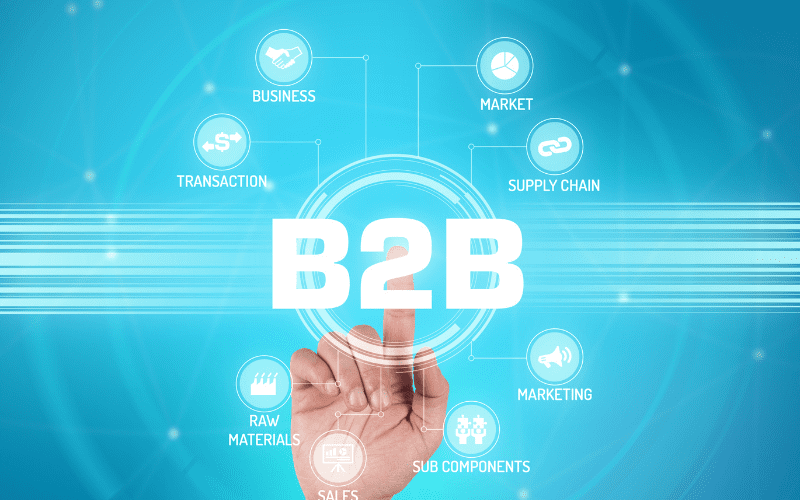
In the real world, a B2B portal is a controlled environment where one business interacts with another through rules, permissions, workflows, and records that need to hold up under scrutiny.
It replaces the chaos.
Emails. Attachments. Side messages. Version six of a spreadsheet called FINAL_v6_reallyfinal.xlsx.
Instead, users log in, see what they’re allowed to see, do what they’re allowed to do, and leave a trail behind. On purpose.
Most B2B portals exist to support things like:
- Partner coordination
- Vendor onboarding and procurement
- Enterprise customer access
- Internal operations stretched across teams, regions, or subsidiaries
What separates a B2B portal from a regular web app isn’t sophistication for its own sake. It’s consequence.
Mistakes matter. Access matters. History matters.
And that changes everything about how these systems should be built.
Why B2B Portals Suddenly Matter So Much
A decade ago, a lot of this work happened manually because it could. Teams were smaller. Expectations were lower. Audits were rarer.
That world is gone.
Today, work happens across continents. Vendors expect updates now, not next week. Enterprise clients want visibility. Regulators want receipts.
Manual processes don’t bend that far. They snap.
A well-designed B2B portal does a few unexciting but powerful things:
- Cuts out repetitive admin work
- Shortens response cycles
- Makes responsibility visible
- Reduces errors caused by handoffs
- Allows growth without adding layers of management
That’s why B2B portal development has moved out of the “internal tools” bucket and into board-level conversations. It’s not IT plumbing anymore. It’s operational leverage.
Not All B2B Portals Are the Same (And That Matters)
One of the fastest ways to build the wrong thing is to assume all B2B portals behave alike. They don’t.
Different portals exist for different relationships.
- Partner Portals
These live in the channel world. Resellers, distributors, affiliates. They manage pricing logic, deal registration, performance data, shared resources. Done right, they reduce conflict. Done poorly, they create it.
- Vendor Portals
Procurement-heavy. Paperwork-heavy. These handle purchase orders, invoices, compliance documents, delivery timelines. Precision matters more than flair here.
- Customer Portals
Built for enterprise clients who want access, not hand-holding. Reports, billing, usage data, service requests. Clarity wins.
- Internal B2B Portals
These glue large organizations together. Multiple departments. Multiple regions. One system that’s supposed to keep things moving instead of slowing them down.
Different goals. Different risks. Same requirement underneath: control without friction.
Why So Many B2B Portals Quietly Fail
Most failed portals don’t crash.
They fade.
People stop using them. They go back to email. Or spreadsheets. Or WhatsApp messages that were “just temporary” three years ago.
Why does that happen?
Usually because of decisions made far too early:
- Treating the portal like a simple website
- Designing features before mapping real workflows
- Locking permissions too tightly or too loosely
- Postponing security because “we’ll add it later”
- Underestimating how messy integrations get
By the time these issues surface, the portal is already embedded in daily operations. Fixing it then is painful, expensive, and political.
Strong B2B portal development starts with an unromantic question:
“How does work actually get done here?”
Not how it’s supposed to. How it really happens.
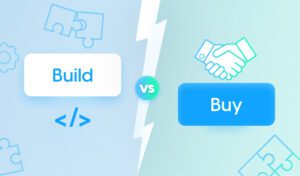
Custom Portals vs Prebuilt Tools (The Honest Trade-Off)
Off-the-shelf portals are tempting. Fast setup. Lower upfront cost. A demo that looks clean.
They work. Until they don’t.
Most generic tools struggle with:
- Rigid workflows that don’t match reality
- Limited customization
- Licensing fees that creep upward
- Integrations that feel bolted on
- Growth beyond the original use case
Eventually, teams start bending their processes to fit the software. That’s the warning sign.
Custom B2B portal development flips the equation. The software bends around the business, not the other way around. It takes longer upfront. It saves time later. Usually a lot of it.
The Quiet Anatomy of a Good B2B Portal
Strong portals don’t advertise their complexity. They hide it.
Under the hood, most successful B2B portals share a few traits.
- Permissions That Make Sense
Users see only what they need. No more. No less. And those rules can change without rewriting half the system.
- Workflows That Match Reality
Approvals, escalations, handoffs. Automated where possible. Explicit where needed.
- Integrations That Don’t Fight Back
ERP. CRM. Billing. Analytics. These systems need to talk without constant babysitting.
- Traceability
Who did what. When. And why. Especially when compliance is involved.
- Reliability
Nothing kills trust faster than a slow or inconsistent portal. Performance isn’t optional.
UX in B2B: The Uncomfortable Truth
People say B2B users don’t care about experience.
They do. They just don’t complain.
They adapt. Or they avoid.
If a portal is confusing, users find workarounds. Emails resurface. Side processes grow. The portal becomes decorative.
Good B2B UX is boring in the best way:
- Predictable navigation
- Clear task paths
- Minimal mental effort
- Interfaces that don’t ask questions
The goal isn’t delight. It’s momentum.
Security Is Architecture, Not a Feature
B2B portals hold contracts, payments, personal data, operational records. That’s not a maybe. That’s a given.
Security decisions belong at the start, not as a checkbox at the end.
That means:
- Strong authentication flows
- Encrypted storage
- Secure APIs
- Monitoring and access logs
- Regular audits
Once trust is broken, it’s hard to earn back. Especially in B2B relationships.
Scaling Is Easier When You Plan for It Early
Many portals are built for today. Tomorrow arrives faster than expected.
Growth introduces:
- More users
- More roles
- More data
- More regions
- More regulation
Scalable B2B portal development relies on modular design, clean boundaries, and infrastructure that can stretch without tearing.
Why Teams Choose Dedicated Developers for B2B Portals
Portals aren’t one-and-done projects.
They evolve. Quietly. Constantly.
That’s why many businesses decide to hire dedicated developers in India for long-term B2B portal work. Not because it’s cheaper. Because continuity matters.
When the same people understand the system deeply, changes are safer. Faster. Less risky.
At HireDeveloperIndia, companies often begin with a small dedicated team and expand only when the portal grows. No drama. No constant relearning.
Choosing a Partner Without Regret
Tools matter. Experience matters more.
A solid B2B portal development partner will:
- Ask uncomfortable questions early
- Surface edge cases before launch
- Plan for change, not perfection
- Document decisions clearly
- Care about maintainability
Be wary of teams that rush straight into building. Speed without understanding costs more later.
What a Well-Built Portal Actually Delivers
When it works, you notice the absence of problems.
Manual work drops.
Errors decrease.
Partners trust the data.
Decisions happen faster.
Growth doesn’t feel chaotic.
The portal becomes part of how the business runs. Not a thing people complain about.
Where HireDeveloperIndia Fits In
HireDeveloperIndia supports companies that need steady, long-term development help, not just a launch team.
The focus stays on:
- Developers with real portal experience
- Business-aligned technical decisions
- Continuous improvement
- Scaling teams without disruption
It’s a quieter model. It lasts longer.
Final Thought (Not a Grand One)
B2B portal development isn’t about speed. It’s about durability.
The strongest portals aren’t flashy. They’re dependable. Clear. Boring in all the right ways.
If your portal removes friction, people use it.
If it adds friction, they route around it.
Everything else is just execution.
Frequently Asked Questions
What is B2B portal development?
It’s the process of building secure systems that allow structured, trackable interactions between businesses, partners, vendors, or enterprise customers.
Why go custom instead of using ready-made tools?
Custom portals reflect real workflows, scale more naturally, and integrate more cleanly with existing systems.
How long does development usually take?
It depends on complexity, but robust portals typically require several months across planning, build, and testing.
Is it safe to hire remote developers for B2B portals?
Yes, when vetting and processes are solid. Many companies successfully work with remote developers in India long term.
Can B2B portals integrate with ERP and CRM systems?
Absolutely. Modern portals are designed to integrate with ERP, CRM, payments, analytics, and more.
How does HireDeveloperIndia help?
By helping businesses hire dedicated developers who focus on building, maintaining, and scaling B2B portals over time.