
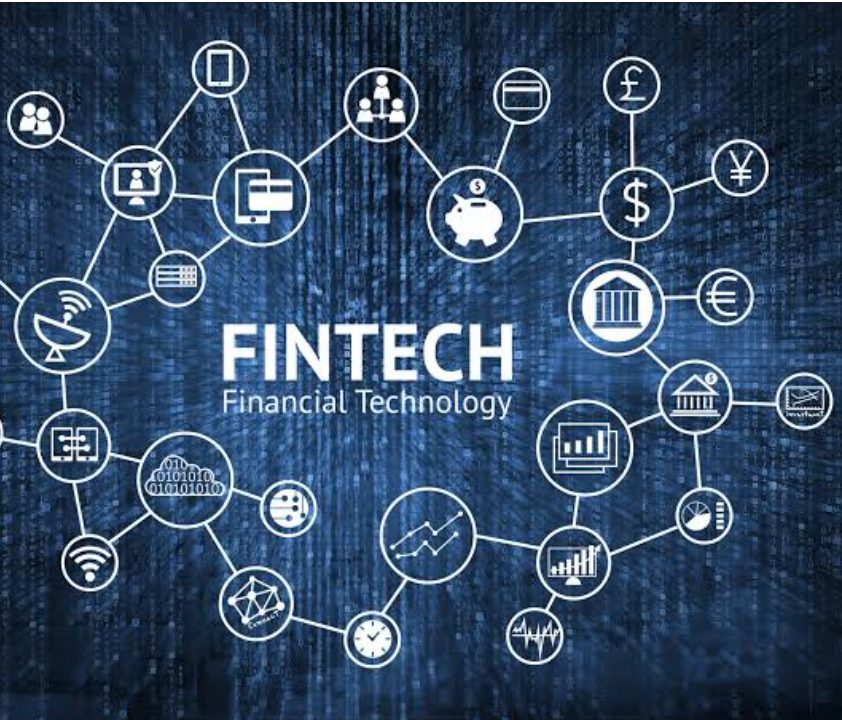
Fintech doesn’t move money anymore.
It moves trust.
Every tap on a payment app, every instant loan approval, and every “your balance has updated” notification depends on something invisible doing its job perfectly. That invisible layer is the API.
Most people talk about fintech APIs like they’re plumbing. Necessary, boring background work.
That’s wrong.
In 2026, fintech APIs are the product.
They decide how fast a startup launches, how safely data moves, how regulators sleep at night, and how users decide whether they trust you with their salary, savings, or credit score.
This guide breaks down fintech APIs the way they actually work in the real world. Not theory. Not vendor brochures. What they do, how they fail, how they scale, and why companies building fintech products are obsessing over them more than UI or features.
Let’s Start With the Simple Truth
No modern fintech product is standalone.
A payment app talks to banks.
A lending platform talks to credit bureaus.A trading app talks to exchanges.
A wallet talks to compliance systems, fraud engines, and identity providers.
APIs are how all of that conversation happens.
Quietly. Constantly. At scale.
What Is a Fintech API, Really?
At its core, a fintech API is a secure bridge between financial systems.
It allows one system to ask another system a question and get an answer back.
Safely. Reliably. Auditable.
For example:
- “Is this user KYC verified?”
- “Can this payment be processed?”
- “What’s the account balance right now?”
- “Does this transaction look suspicious?”
The API doesn’t just return data. It enforces rules.
Rules about who can ask.
Rules about what they can see.
Rules about what happens if something goes wrong.
That’s what makes fintech APIs different from regular APIs. The margin for error is basically zero.
Why Fintech APIs Became Central After 2020
Before 2020, many financial systems were slow, manual, and closed.
Then digital adoption exploded.
Users expected instant everything.
Regulators demanded better traceability.
Fraud became smarter and faster.
Banks were forced to open up.
This is where fintech APIs moved from “integration layer” to business backbone.
By 2026, most fintech companies won’t ask, “Should we use APIs?”
They ask, “Which APIs do we trust our entire product with?”
Types of Fintech APIs You’ll See Everywhere in 2026
Not all fintech APIs do the same job. Lumping them together is how systems break later.
Here are the major categories that matter.
1. Payment APIs
These handle money movement.
Card payments.
Bank transfers.
Wallet-to-wallet transactions.
Recurring billing.
What makes them hard is not sending money. It’s handling edge cases.
Retries.
Timeouts.
Chargebacks.
Partial failures.
A good payment API doesn’t just process success. It handles failure gracefully.
2. Banking and Open Banking APIs
These let fintech apps access bank data with user consent.
Account balances.
Transaction history.
Standing instructions.
Open banking APIs changed the game by turning banks into platforms instead of closed vaults.
But they also introduced complexity.
Different banks.
Different standards.
Different uptime guarantees.
Fintech products that survive know how to normalise chaos at the API layer.
3. Identity and KYC APIs
Identity is the first gate.
Before money moves, identity must be verified.
Before loans are approved, risk must be assessed.
KYC APIs connect apps to identity databases, document verification tools, biometric checks, and AML systems.
In 2026, these APIs will no longer require one-time checks. They’re continuous.
Identity now updates as users change behaviour.
4. Lending and Credit APIs
These power credit decisions.
They pull credit scores.
Analyse income patterns.
Calculate risk in real time.
The tricky part is not the maths. It’s the compliance.
Every decision must be explainable.
Every API call must be logged.
Every rejection must be defensible.
That’s why fintech lending APIs are built with auditors in mind, not just developers.
5. Investment and Trading APIs
These connect apps to markets.
Stocks.
Crypto.
Derivatives.
Funds.
Speed matters here. Latency costs money.
But so does reliability.
A trading API that’s fast but inconsistent is a lawsuit waiting to happen.
6. Compliance and Reporting APIs
These are the unglamorous ones. Also, the most important.
They track transactions.
Generate reports.
Trigger alerts.
Store logs.
Regulators don’t care how pretty your app is.
They care if your API trail is clean.
How Fintech APIs Actually Work Behind the Scenes
Let’s walk through a real example.
A user opens a fintech app and sends money.
What happens next is not one action. It’s a chain reaction.
- The app calls an authentication API to verify the user session.
- A KYC API confirms the user’s status
- A fraud API evaluates the transaction
- A payment API processes the transfer
- A banking API updates balances
- A notification API informs the user
- A compliance API logs everything
All of this happens in seconds.
If even one API fails, the system must decide:
Retry?
Rollback?
Alert?
Block?
This orchestration is where fintech products either feel magical or terrifying.
Why APIs Are Where Fintech Products Break First
Most fintech failures don’t happen at the UI level.
They happen in:
- Poor error handling
- Unclear API contracts
- Unstable third-party dependencies
- Weak fallback logic
One unstable API can:
- Delay payments
- Misreport balances
- Trigger false fraud alerts
- Violate compliance rules
That’s why experienced fintech teams design APIs as products, not utilities.
Security: The Non-Negotiable Layer
In fintech, APIs are attack surfaces.
They are probed constantly.
APIs must handle:
- Authentication tokens
- Rate limits
- Encryption
- Role-based access
- Audit trails
Security is not “added later”. It is embedded at design time.
Teams that ignore this usually learn the hard way.
API Standards That Matter in 2026
Fintech APIs don’t exist in isolation anymore. They follow standards.
REST is still common.
GraphQL is used selectively.
Event-driven APIs are growing fast.
More importantly, standards like:
- OAuth 2.0 for authorization
- ISO 20022 for payments
- Open Banking specifications
These standards reduce friction between systems and regulators.
Ignoring them means slower partnerships and longer approvals.
Fintech APIs and Regulation: Built Together Now
Regulation is no longer an external constraint. It’s part of the architecture.
APIs now include:
- Consent management
- Data residency controls
- Access revocation
- Time-bound permissions
In 2026, regulators expect APIs to prove compliance automatically.
Manual reporting is fading.
Scaling Fintech APIs Without Losing Control
Early-stage fintech products often work fine.
Then users grow.
Traffic spikes.
Partners increase.
Suddenly, APIs slow down.
Scaling APIs requires:
- Horizontal scaling
- Caching strategies
- Circuit breakers
- Observability
The hardest part is scaling without breaking trust.
A delayed social feed is annoying.
A delayed payment is unacceptable.
Build vs Buy: The Fintech API Decision
One of the biggest decisions fintech teams face.
Do you build APIs in-house or use third-party providers?
There’s no universal answer.
Build when:
- The API defines your core differentiation
- You need deep control
- You expect unique workflows
Buy when:
- Speed matters more than customisation.
- Compliance overhead is high
- The API is commoditised.
Most mature fintech products use a hybrid approach.
Where Development Teams Get It Wrong
Common mistakes seen repeatedly:
- Treating APIs as backend-only concerns
- Ignoring documentation quality
- Underestimating monitoring needs
- Assuming third-party APIs are always available
APIs are living systems. They need care.
Why Fintech Teams Hire Specialized API Developers
Fintech APIs are not beginner-friendly.
They require experience with:
- Distributed systems
- Financial data models
- Regulatory expectations
- Failure scenarios
This is why companies increasingly choose to hire fintech-experienced developers rather than generalists.
Many global fintech firms quietly hire developers in India because of deep exposure to real-world fintech integrations across payments, banking, and compliance systems.
At HireDeveloperIndia, teams often come in after initial MVPs break under scale. The request is rarely “build faster”. It’s usually “make this reliable.”
Fintech APIs and AI in 2026
AI doesn’t replace APIs. It amplifies them.
AI systems consume API data to:
- Detect fraud patterns
- Predict credit risk
- Personalize financial products
APIs provide the structured, auditable data AI needs to work responsibly.
Without strong APIs, AI models drift. That’s dangerous in finance.
The Business Impact Most Leaders Miss
Fintech APIs affect:
- Time to market
- Partner onboarding speed
- Regulatory approval timelines
- Customer trust
They are not just technical choices. They are a business strategy.
A weak API architecture silently taxes growth.
What to Look for When Building or Choosing Fintech APIs
Ask hard questions early.
- What happens when this API fails?
- How is consent managed?
- How do we audit decisions?
- How do we scale without rewrites?
Good APIs answer these before launch.
Why Teams Rely on HireDeveloperIndia for Fintech Builds
Fintech teams don’t need hype. They need stability.
At HireDeveloperIndia, companies work with developers who have:
- Built payment and banking integrations
- Passed audits
- Handled real traffic spikes
- Designed for compliance first
It’s less about speed. More about durability.
The Quiet Truth About Fintech APIs
Users never see them.
Regulators always do.
If your APIs are solid, your product feels effortless.
If they’re weak, everything else collapses.
In 2026, fintech success is less about features and more about foundations.
APIs are that foundation.
FAQs
What is a fintech API used for?
Fintech APIs enable secure communication between financial systems, allowing apps to process payments, verify identities, access banking data, and meet regulatory requirements.
Are fintech APIs secure?
They are secure when designed correctly. This includes encryption, authentication, access control, and continuous monitoring.
How do fintech APIs differ from regular APIs?
Fintech APIs handle sensitive financial data and must meet stricter compliance, security, and reliability standards.
Can startups build fintech APIs in-house?
Yes, but only if they plan for compliance, scaling, and failure handling from day one.
Why do fintech companies hire API developers from India?
Because of experience density, exposure to global systems, and strong technical depth in financial integrations.
Does HireDeveloperIndia support fintech development?
Yes. Teams often work with HireDeveloperIndia to build, scale, or stabilise fintech APIs with long-term reliability in mind.