
Hire Xamarin Developers India
Expression is equal, budgets are finite: then Xamarin is your lever. Hire Xamarin developers from HiredeveloperIndia who build apps that run natively on iOS and Android while sharing the engineering investment. Your product moves quicker, your staff remains focused, and your code remains cohesive.

Xamarin Market Overview
The market position that Xamarin holds is rather specific, yet it is increasing, and most ordinary viewers overlook it. While Xamarin is used to create mission-critical applications in Fortune 500 companies, government agencies, and established businesses that already use Microsoft infrastructure based on .NET, React Native, and Flutter make headlines due to the adoption of startups in their stacks. Over 1.4 million developers use the .NET ecosystem today, and a significant portion of those who create mobile products choose to use Xamarin because it enables them to leverage the same C# codebase, team expertise, and investments in the company's .NET tooling and library.
The market is in favor of Xamarin in some segments. In financial services firms, insurance companies, healthcare providers, and large retail operations, decades' worth of C# backend logic cannot be discarded or rewritten. For these companies, Xamarin is a practical solution rather than the hip thing to do. Unlike forgotten cross-platform frameworks that abandon development teams midway through a project, official support and integration with Visual Studio guarantee enterprise support, regular updates, and a roadmap. Also, the trend towards .NET MAUI reflects the long-term investment of Microsoft in mobile development, which establishes a clear upgrade pathway to existing Xamarin applications and which has no dead-end technology.
Xamarin Market Overview
The market position that Xamarin holds is rather specific, yet it is increasing, and most ordinary viewers overlook it. While Xamarin is used to create mission-critical applications in Fortune 500 companies, government agencies, and established businesses that already use Microsoft infrastructure based on .NET, React Native, and Flutter make headlines due to the adoption of startups in their stacks. Over 1.4 million developers use the .NET ecosystem today, and a significant portion of those who create mobile products choose to use Xamarin because it enables them to leverage the same C# codebase, team expertise, and investments in the company's .NET tooling and library.
The market is in favor of Xamarin in some segments. In financial services firms, insurance companies, healthcare providers, and large retail operations, decades' worth of C# backend logic cannot be discarded or rewritten. For these companies, Xamarin is a practical solution rather than the hip thing to do. Unlike forgotten cross-platform frameworks that abandon development teams midway through a project, official support and integration with Visual Studio guarantee enterprise support, regular updates, and a roadmap. Also, the trend towards .NET MAUI reflects the long-term investment of Microsoft in mobile development, which establishes a clear upgrade pathway to existing Xamarin applications and which has no dead-end technology.
Deep Xamarin Architecture Bridging Platforms Without Losing Identity
The technical basis of Xamarin is based on the Mono runtime system and C# bindings as wrappers of the native platform APIs, and it still provides full access to the capabilities of the platform. This design implies that your application runs as native executable code on every platform and not in bytecode or other intermediate forms. Maintaining its performance properties and providing code sharing. The most significant technical issue is the sharing boundary, which entails determining which logic should be shared in common projects and which should be implemented in platforms.
When you hire Xamarin app developers from HiredeveloperIndia, you get engineers who architect this boundary precisely. They design code such that domain models, business logic, and access data layers exist in common C# projects, whereas UI rendering, platform-specific integrations, and platform system APIs are found in platform-specific implementations. Such segregation helps to avoid the usual trap of over-sharing, resulting in limited UI design and penalties on performance. Dependency injection, platform abstraction layers, and conditional compilation are used by advanced developers to ensure clean separation and maximize reuse.
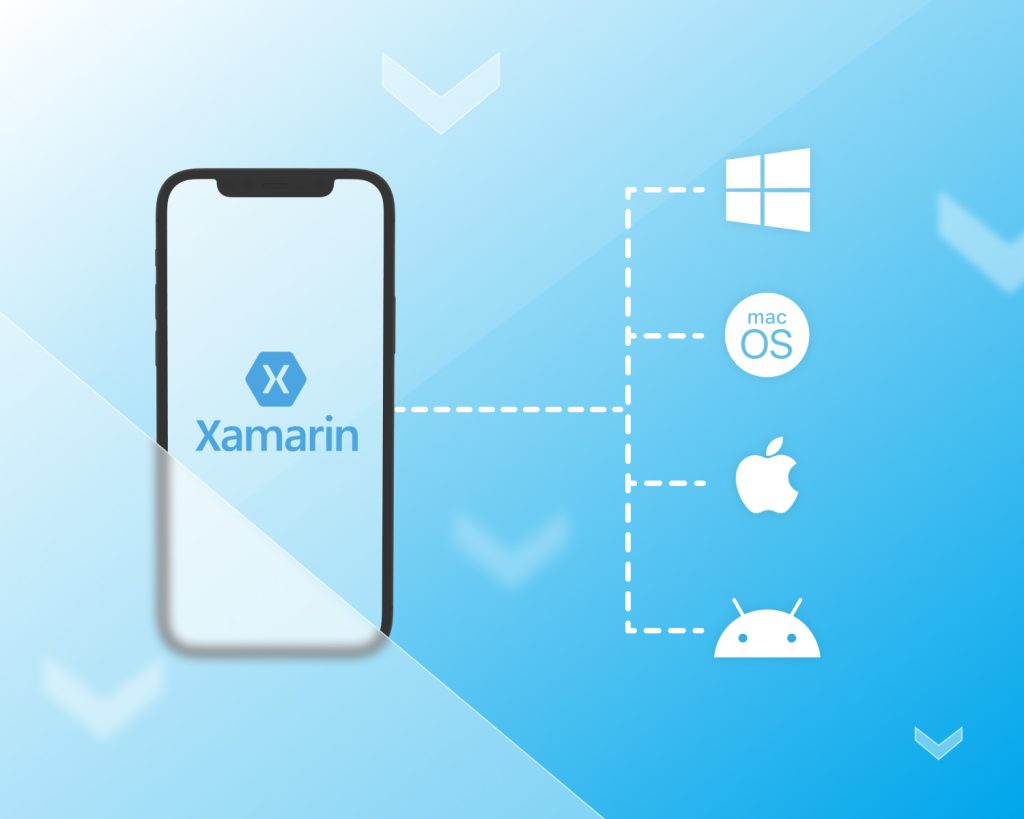
The technical basis of Xamarin is based on the Mono runtime system and C# bindings as wrappers of the native platform APIs, and it still provides full access to the capabilities of the platform. This design implies that your application runs as native executable code on every platform and not in bytecode or other intermediate forms. Maintaining its performance properties and providing code sharing. The most significant technical issue is the sharing boundary, which entails determining which logic should be shared in common projects and which should be implemented in platforms.
When you hire Xamarin app developers from HiredeveloperIndia, you get engineers who architect this boundary precisely. They design code such that domain models, business logic, and access data layers exist in common C# projects, whereas UI rendering, platform-specific integrations, and platform system APIs are found in platform-specific implementations. Such segregation helps to avoid the usual trap of over-sharing, resulting in limited UI design and penalties on performance. Dependency injection, platform abstraction layers, and conditional compilation are used by advanced developers to ensure clean separation and maximize reuse.
- *Multi-layer testing strategies
- *Platform abstraction interfaces
- *Conditional compilation directives
- *Native library bindings and P/Invoke
- *Background task architecture
- *Persistence and synchronization patterns
Tangible Engineering Outcomes
You are also mentored on patterns and practices specific to Xamarin. When your team has not created Xamarin applications yet, then our developers can create conventions, which your team can use, reviewing standards of architecture, finding errors, and documenting architecture, which will stay even with the change in personnel. When you contract a Xamarin developer, what you are buying is not capacity; you are buying experience and giving your own staff higher levels of capability.
- *Unified codebase maintained
- *Native iOS performance
- *Android performance native
- *Shared business logic
- *Comprehensive platform testing
- *Architectural documentation clear
Why Hiring Expert Xamarin Developers Changes Your Timeline
These errors are expensive and can only be avoided by having expert Xamarin developers who make wise decisions at the initial stage before code proliferation makes it costly to change. They are also aware of lifecycle management on either side, eliminating resource leaks that mount with the duration of your application. They understand the behaviour of performance on each platform and tune it as such, instead of thinking that Xamarin will abstractly perform well everywhere. By contracting specific Xamarin developers, you are investing in individuals who will get these decisions right the first time and avoid months of agonizing refactoring right afterwards.
These errors are expensive and can only be avoided by having expert Xamarin developers who make wise decisions at the initial stage before code proliferation makes it costly to change. They are also aware of lifecycle management on either side, eliminating resource leaks that mount with the duration of your application. They understand the behaviour of performance on each platform and tune it as such, instead of thinking that Xamarin will abstractly perform well everywhere. By contracting specific Xamarin developers, you are investing in individuals who will get these decisions right the first time and avoid months of agonizing refactoring right afterwards.
- *Early architectural detection
- *Logic sharing prevents
- *Platform optimizations applied
- *Resource leak prevention
- *Lifecycle management correct
- *Performance profiles understood
Our Development Process From Concept Through Production
Our Xamarin projects have a defined flow that aligns with the Xamarin strengths and reality. The first step is to get to know what is in your current .NET infrastructure. What can be shared at the logic level, and whether it is reasonable to use pure Xamarin, hybrid strategies, or platform-specific parts. This analysis will help avoid the natural trap of putting Xamarin into a scenario where the native would actually benefit you better.
The architecture design phase defines shared projects, platform-specific projects, and integration points. We produce visual architecture documentation to ensure that your team knows your decisions and is able to preserve them even without the original developers. The next steps in development are then run in parallel: shared logic development and platform-specific UI development, as well as integration points, are under constant testing. This parallelism ensures that iOS and Android teams do not need to work in sequence but instead in parallel, which makes it possible to compress the timeline compared to sequential native development.
- *Initial feasibility assessment
- *Architecture design documentation
- *Parallel development streams
- *Integration testing continuous
- *Performance optimization profiling
- *Production monitoring setup
Xamarin Development Services
We, too, cover the cases where it needs subtlety: performance-sensitive code where you need native code, but on the other half of the cell, it needs Xamarin orchestration; integration cases where you have existing C# code bases that the mobile apps must call on; and state cases where complex synchronization code would be a nightmare to maintain in isolation. When you hire Xamarin developers from us, you get people comfortable with messy real-world situations, not just greenfield perfection.
We, too, cover the cases where it needs subtlety: performance-sensitive code where you need native code, but on the other half of the cell, it needs Xamarin orchestration; integration cases where you have existing C# code bases that the mobile apps must call on; and state cases where complex synchronization code would be a nightmare to maintain in isolation. When you hire Xamarin developers from us, you get people comfortable with messy real-world situations, not just greenfield perfection.
- *Greenfield app development
- *Migration strategy planning
- *App modernization services
- *Backend C# development
- *Architecture cross-platform consulting
- *Performance optimization refactoring
Why Choose HiredeveloperIndia For Xamarin Development

Third, pricing starts at $15/hour for experienced Xamarin developers under the Hire Xamarin Developer India model, with rapid onboarding in 48–72 hours. You are not spending months waiting to get costly Western developers, and you are getting senior talent at a fair rate. Fourth, our developers operate on timeframes that offer real-time collaboration with the US and European teams, thus allowing them to solve problems simultaneously without a back-and-forth delay. Lastly, we will promise to support and develop your codebase over the long run and not dump it after launch.
- *ISO certified processes
- *Deep .NET expertise
- *Transparent $15 pricing
- *Rapid 48-72 onboarding
- *Flexible engagement models
- *Long-term support commitment
Custom Xamarin Development
When you hire Xamarin developers for custom development, you are hiring problem-solvers who think architecturally about constraints. They come up with solutions that can operate within your boundaries instead of claiming that they do not exist. They also record all the trade-offs made and the reason behind some decisions being more suited to one approach than the other, so that future maintainers know the rationale, rather than the code alone.
Custom Xamarin development addresses the edge cases and special constraints that set your business apart from cookie-cutter applications. You may require Xamarin that is compatible with current COM libraries or old-fashioned C++ programs via platform bridges. You may require complex offline-first synchronization that ensures your application remains operational even when the networks are unavailable and later synchronizes changes as the networks resume their operation. You may require some elaborate animation frameworks or special-purpose controls that need to fall into native implementations of certain features and leave Xamarin to coordinate them.
When you hire Xamarin developers for custom development, you are hiring problem-solvers who think architecturally about constraints. They come up with solutions that can operate within your boundaries instead of claiming that they do not exist. They also record all the trade-offs made and the reason behind some decisions being more suited to one approach than the other, so that future maintainers know the rationale, rather than the code alone.
- *Legacy system integration
- *Offline-first synchronization
- *Complex animation systems
- *Custom control development
- *Real-time data streaming
- *Security-hardened implementations
Our Hiring Models
Hourly gatherings are appropriate when the consultation is short, you want to add a small feature, or you want to optimize a performance sprint. Part-time developers are good at maintenance, bug fixes, and incremental improvement, but not full-time. Full-time committed developers become a part of your team, engage in planning, and own technical direction. Fixed-price projects with a defined scope are those where the requirements are well known and you require cost certainty. You won’t ever pay for unnecessary capacity because each model is distinguished by clear billing, straightforward contracts, and the ability to amend commitments in the event of changes.
- *Hourly consulting rates
- *Part-time maintenance support
- *Fully dedicated developers
- *Fixed-price project engagements
- *Team augmentation scaling
- *Retainer flexible arrangements
Fill The Form To Hire A Xamarin Developer
Explain where you are today, your envision of the product, and your time constraints.
Expanding Your Development Ecosystem Beyond Xamarin
A majority of products will ultimately require more than Xamarin developers. You would require C# backend experts who would be knowledgeable on microservices, database optimization, and API design. You may require frontend web developers to create companion dashboards or administrative interfaces. You may require QA engineers with a thorough grasp of both platforms. Under the Hire App developer India and Hire Dedicated Developer India models, we connect you with talent across disciplines, coordinated through one relationship rather than scattered procurement.
In case you want to have web elements, IoT integrations, or even a brand new stack in your roadmap, we have developers at those three stacks, too, who can work closely with your Xamarin team. Such coordination ensures that interaction among teams representing various vendors is not normally strained, as the teams have difficulties with architecture alignment, communications, or technical choices.
Core Values Shaping Our Xamarin Work
Clarity
JavaScript can be written with ease and then comprehended by another programmer after a single read. We prefer explicit to implicit and clear to compact. Your code ought to be prose, rather than poetry that only your author can comprehend.
Planning
Before coding, we take time to think and write and document. Said thinking will be rewarded by shifting requirements or a new developer who must learn the system without excavation of the past in the form of Git history.
Pragmatism
We are not saying that iOS and Android are the same. We honor platform protocols, performance properties, and user needs and maximize legitimate code sharing. We shift the line when early judgments turn out to be false, not defensively, but pragmatically.
Profiling
We profile, we test, and we measure. We do not believe that Xamarin will be too slow or that native would certainly be better. We do not collect data and make informed judgments on the basis of ideology but actual characteristics.
Extensibility
We design code in such a way that it will be easy to add new developers, alternate implementations, or even upgrades to newer frameworks. The modern-day solution must not turn out to be the goal of tomorrow.
Honesty
When a deadline appears unrealistic, when a requirement is vague, or when technical risk appears high, your Xamarin team articulates that early and explicitly to allow stakeholders time to realign instead of finding out issues in production.
Excellence
Xamarin evolves. .NET evolves. Mobile platforms evolve. Our developers are not behind, and they continue to improve your codebase as the ecosystem evolves, instead of letting your stack become obsolete as your competitors evolve.
Support
We do not pass code and vanish. We keep an eye on the behavior of production, react to the problems, and optimize based on actual usage patterns, and we are there as your product develops and you change requirements.
Frequently Asked Questions
In what cases would you recommend Xamarin over React Native or native development?
What is the amount of code that I can easily port over to Xamarin?
Should I get a single Xamarin developer or get a team?
How about the migration of Xamarin? Forms to MAUI?
Do Xamarin developers deal with the backend C# code as well?
What is your experience using Xamarin and iOS code signing and certificates?
What does it cost to hire Xamarin developers in India from HireDeveloperIndia?
What is the average duration of onboarding?
Join 500+ Fortune companies
and fast-scaling startups who have trusted Hire Developer India
Media Coverage


